Showing posts with label Hercule Poirot Book Reviews. Show all posts

Saturday, 23 April 2016

Poirot Investigates (#3)


By Agatha Christie


THE SHORT

Poirot returns, and in this collection of eleven stories, the mysteries he solves are...strangely uncompelling and unfulfilling? The stories Christie jam into this 265 page book seem rushed, and no more than sketches, skeletons of outlines that Christie planned to use later to develop into full length novels. As such, the short stories are thoroughly boring and drab, devoid of the usual sparkle that Christie injects into her full-length novels. Perhaps she had been trying to emulate the great Sherlock Holmes by transforming Poirot into another form, but it fails terribly. Motives are left unresolved, and we never actually get to see much of what makes Poirot such a good mystery solver. Christie seems to be searching for ways to surprise to the reader, rather than well-explained ways that can still dazzle the reader. However, there are gems in this collection, but they are few. Mediocre and lacking in the true mystery, Poirot Investigates falls far below my expectations.

THE REVIEW

As I have done with The Memoirs of Sherlock Holmes, I shall be reviewing each and every short story featured in this book, and the end I shall provide a general summary and a rating.

The Adventure of 'The Western Star'

Circling around the dual theft of a diamond, this story is bad. Really, really bad. There is no mystery at all for Poirot to solve and we spend most of this story plodding around in Hastings's dimwitted brain, unable to see Poirot's magic at work. Rather, Christie builds up a weak story with no premise at all, unsuccessfully trying to create suspense, and the solution comes rather rushed. To be truthful, I had to make myself sit through this one. One finds the overbearing Hastings's complaints annoying and unwelcome, and Christie failed in this area to compare Hastings to Watson, as Hastings remains boring, one-sided, and completely unreadable. Only one thing to say: <<sigh>>

Rating: 4.2/10

The Tragedy at Marsdon Manor

About a man who seems to have died from a internal hemorrhage, this story gives away far too much of its solution ahead of time, with Poirot telling Hastings about the case, when this spoils the mystery. However, in this story we witness two of Christie's most clever devices, Poirot using the word-association technique to gather clues, and his drama to expose Mrs. Maltravers. However, there is very little development from the first story to this, although this one is just slightly better than the previous one. Underdeveloped, the plot here fails to full enrapture the readers.

Rating: 5.4/10

The Adventure of the Cheap Flat

Here, the story suffers from an eternal problem of Christie's: the use of previously unknown stories used to solve mysteries. Evident in The Murder on the Links, here it smashes itself into the wall and drags the whole story down. The mystery hinges on this one fact, and it really is vexing to the reader that we don't actually get to start on a equal footing with Poirot. Poirot's "joke" of the cat at the end is, instead of being hilarious, is drab. Again, it all seems rushed, as Poirot has to resort to extremely short explanations.

Rating: 4.3/10

The Mystery of Hunter's Lodge

Actually, the solution here isn't half-bad, and its the first thing to truly just give the reader a glimpse of Christie's writing at its best. However, the predictable foil of the pistol placed at the tracks and the killing of Uncle Pace is way too obvious to the careful reader, and perhaps this is a result of Christie trying to give a chance. The concoction of Mrs. Havering playing the double role as the housekeeper is unsurpassed, as this twist is at least successfully pulled off. An average story.

Rating: 6.5/10

The Million Dollar Bond Robbery

This story, too, is unsurpassed. In how little sense it makes. For starters, the old man Shaw has absolutely no motive at all to sell the bonds, and this isn't even hinted at in the story. Greed for more money may be one of them, but one feels irked that he has to figure this out himself, instead of Christie actually telling us what Shaw wanted. For another, Christie suffers from trying to surprise the reader too much; while she tries to surprise us with Shaw being the criminal, she makes it far too unbelievable instead. Boring and bad, this story should be skipped altogether.

Rating: 2.1/10

The Adventure of the Egyptian Tomb

Finally, Christie serves up a literary delicacy. Hard upon the heels of the horrible previous story, Christie successfully manages to show Poirot's inner understand of human psychology, working from a logical statement and solving the mystery from there. Brilliant, this story is made all the better with its superb suspense and expert plot, which lift it high above the other stories in this book. Simply amazing.

Rating: 8.6/10

The Jewel Robbery at the Grand Metropolitan

After the high of The Adventure of the Egyptian Tomb, Christie relapses into poor storytelling, making the solution of the mystery based on a single clue which any smart thief would know not to give to Poirot. Sure, the solution is smart and it leaves you kind of satisfied, but one feels that this story could have been made better without unnecessary embellishments on Christie's part.

Rating: 6.1/10

The Kidnapped Prime Minister

Trying to recapture some of the better Poirot stories, Christie fails in trying to raise the stakes in this story. By making Poirot save the Prime Minister, it seems like Christie was so desperate for material that she had to resort to Poirot solving a diplomatic mystery. She fell prey to the cliche, and this story is a joke and unbelievable. Really, one almost had to hold in one's laughter as he read this. Made all the worse by the stupid solution which doesn't satisfy you at all.

Rating: 3.7/10

The Disappearance of Mr. Davenheim

Another welcome delight, though not as good as The Adventure of the Egyptian Tomb, this story displays Christie's imagination as she thinks up an excellent mystery and an even better solution to boot. However, she mars it by including too many unnecessary details, which may confound Poirot, but it confuses the readers even more. A clever story, this one is nearly very good.

Rating: 8.2/10

The Adventure of the Italian Nobleman

Mediocre, the only thing this story offers up is surprise. Surprise in the call, the death, the Italian, Poirot's solution and the criminal. So repetitive, it starts to get on your nerves. Though it may be a bit compelling and interesting, it is only up till the point where Poirot discovers the dead body that you are interested. From then on, it becomes a little obvious, as Christie yet again rushes to the end, Poirot also rushing to complete his explanation before it becomes far too long.

Rating: 5.5/10

The Case of the Missing Will

Unfortunately, Christie wasn't able to finish this poor novel on a swansong, rather, she collapses towards the finish line, panting as she crawls across the line, struggling to end this bland book. Obvious and predictable, this story suffers from every "Christie-ism" listed in this review. It is rushed, motiveless (and sexist as well), and rather confusing. Christie doesn't explain things much, leading to this story becoming a tangled whirl of Poirot shouting: "OF COURSE!" Bleh.

Rating: 3.1/10

OVERALL

All in all, this was a very poor collection of Poirot stories, and Christie severely disappoints us with this novel. Drab, we can only hope that Christie learns her lesson after this underperforming novel. Far from entertaining, the mysteries here are very boring and confusing.

Overall Rating: 5.2/10
Overall Advice: Remember when I said above that you should skip The Million Dollar Bond Robbery? Well, I changed my mind. You should skip the whole book, with the notable exception of The Adventure of the Egyptian Tomb and The Disappearance of Mr. Davenheim.

Well, this book was a sore disappointment, but I hope that Christie really improves on her writing, otherwise, Poirot will become unreadable. Terribly sorry that Poirot, one of the most charismatic detectives, has to suffer in this dull book.

Next week:I return to a galaxy far, far away with my review of Star Wars Episode II: Attack of the Clones! The film was mildly better than The Phantom Menace, but can R.A. Salvatore salvage the film and bring to a brilliant book form? Or will it flop like the movie did? Find out next week as I review Star Wars Episode II: Attack of the Clones!

Saturday, 13 February 2016

The Murder on the Links (#2)

By Agatha Christie


THE SHORT:

'The Murder on the Links' is an extremely fun novel. The plot keeps you wondering for ages before Christie cleverly reveals her hand using Poirot, who, once again, is enigmatic and enjoyable to spend time with. However, Poirot's first explanation of the crime to Hastings is hard and unable to wrap around one's head. Perhaps Christie has decided on a new character for Poirot, as he is shown in a more active state in this book than the previous. This book certainly has its flaws and downfalls, but in the end the compelling mystery and its delightful solution will definitely satisfy readers.

THE PLOT:

After many a blog post, I have discovered that many readers simply do not have the time to read every single word of my reviews. In order to let them know of much of my review in a short amount of time, and also to give you readers a hint of the later review, I have introduced what I call 'The Short'. It is a condensed account of my review, that I promise will be no more than one paragraph. Of course, 'The Short' is still being tested, and I would appreciate it if you could leave your comments and suggestions below. Thanks and continue reading!

Captain Hastings meets a delightful girl named 'Cinderella' on a train back to England, and they become friends. However, Cinderella does not leave anything to contact her with, and Hastings parts reluctantly. Arriving in England, Hastings catches up with his friend Poirot. They receive a strange plea of help from a certain Monsieur Renauld, a millionaire, who implores that they hurry to Merlinville, because he is some strange danger. Poirot reaches France, but too late! When they arrive at Renauld's house they find out that Renauld has been found stabbed in the back in a shallow grave on a golf course. The dagger used to stab him was a gift from Renauld's son, Jack, to Madame Renauld. His wife had been bound and gagged by two masked men who apparently attacked her and kidnapped her husband. That must have been when Renauld was killed. Renauld has a passionate love letter in his overcoat, written to him by 'Bella'.

The neighbours of Renauld, Madame and Marthe Daubreil, mother and daughter, are questioned due to large amounts of sums sent to Madame Daubreil, which suggests blackmail of Renauld. Madame Renauld is questioned, but she told the story mentioned above. Hastings bumps into Cinderella on the golf course, and shows her the body. Cinderella faints, and, distressed,  Hastings brings her to her hotel. They split up, but then the knife with which the murder was done disappears! It had been kept in the same place as the body. Hastings realises that he forgot to lock the door to the body, and someone must have stolen it then. They interview the gardener, and Renauld's secretary Stonor, when Jack suddenly reappears. He was supposed to have gone to South America, but his father never told him why.

Then, a second body is found in the gardener's shed, a complete stranger, one that no one can identify. He has been murdered in the exact same way, with a dagger through his heart. Even though the theft of the dagger had only occurred the previous day, the doctor pronounces the body as having been dead 48 hours. Poirot notices foam at the mouth and concludes that he had died of an epileptic fit. He had then been stabbed with the dagger. Poirot says that he had noticed the similarity between Madame Daubreil and Madame Beroldy. The latter had been involved in the Beroldy case, a murder case of fantastic proportions, with details similar to that of the story told by Madame Renauld. In the Beroldy case, Beroldy's lover, Georges Conneau, had been accused of the crime.

They find out that Jack had been in Merlinville in the night of his father's murder, but he says that he had only been to visit Marthe, his lover. Marthe reveals that she had seen the stranger quarreling with Renauld on the night of Renauld's death, and is sure that the stranger is the one lying in the shed with the dagger through her heart. Jack is suddenly arrested by the officer against Poirot, Giraud, but he does not offer any defence at all. Poirot tells Hastings that they have forgotten Georges Conneau, whom he knows to be Renauld. Madame Daubreil was blackmailing Renauld to keep her mouth shut, as she knew who she was. Jack then fell in love with Marthe, and Renauld wanted to stop him from marrying Marthe. Renauld and his wife plan to fake his own death and escape to South America, in order to escape Daubreil. A rough tramp, then found his way into the garden, had a quarrel with Renauld, and fell down dead, an epileptic. The mysterious girl, Bella, then came to Renauld's house, but Renauld got her out of the way. He began digging the grave for the tramp's body, but then he is stabbed in the back by an unknown person and falls down dead in the grave. Poirot tells Hastings that Bella must have been Jack's other lover, and the letter in the overcoat was Jack's.

Poirot finds a picture of Cinderella in Jack's drawer signed: With love from Bella. Hastings then realises that Cinderella was Bella, and that she must have waited around the golf course, then upon seeing him, killed him because he was preventing her marriage with Jack. He and Poirot sail back to England to track down Bella. They find out that she is part of an acrobatic act with her sister. After watching her performance, Hastings goes to a nearby bar, where Bella is. He declares his love for her and kisses her, but then unexpectedly, Poirot breaks in. Hastings restrains him and thus allows Bella to escape. The next day, Hastings suddenly remembers Jack and his arrest, and Bella's escape would mean death for Jack, because he wasn't offering any defence! Poirot receives a plea for help from Marthe, and reveals Monsieur Renauld's true identity to her.

At Jack's examination, all seems lost when Jack lies obviously and says nothing to defend himself. Then, a lady in black arrives in the court and says that she is Bella Duveen, and she wished to give herself up for the murder of Monsieur Renauld. In a letter to Hastings, Cinderella tells him that her real name is, not Bella Duveen, but instead Dulcie Duveen. She says that Jack had given Bella an identical dagger to the one used to kill Renauld. On the night of Renauld's death she had tried to dissuade Bella from going to Merlinville, but Bella refused. Then, when she saw the dagger with the body, she knew Bella must have killed him and there were fingerprints on it. She stole the dagger and dropped into the sea, thinking that was the end. However, that didn't stop Bella giving herself up for the crime. When Jack is released, he says that on the night of Renauld's death he had been walking over the golf links to Marthe, when he heard a loud scream. Running to the spot, he saw Bella with a look of horror on her face. Bella then ran, and Jack quickly took a car back to Cherbourg.

However, Madame Renauld loudly disowns Jack, and he faints and falls terribly sick. Leaving him in the care of Marthe and Madame Daubreil, Poirot and Hastings find a certain 'Mrs. Robinson', who is actually Cinderella. She gives Poirot another identical dagger, then accompanies them to Madame Renauld's house to wait outside her room. Suddenly, a mysterious attacker enters a different room, as  Madame Renauld must have changed her room. Rushing in, Poirot and Hastings are unable to enter, but Cinderella, being an acrobat, swings her way inside. The attacker falls down and hits the marble fender, dead. The attacker is revealed as Marthe Daubreil, who had tried to kill Madame Renauld.

Poirot says that Jack had three daggers made, one for his mother, one for Bella and one for Marthe. Marthe, he tells Hastings, suffered from the same mental disorder as her mother, making her cold-blooded and cruel, only pretending to love Jack so that she could have the money. She overheard Renauld's plan to fake his death and is angered. On the night itself, when Renauld is digging the grave, she stabs him in the back with her own dagger. Bella and Jack, therefore, happened on the crime at the same instance. Thus, if the dagger Cinderella dropped into the sea was Marthe's, then Bella's own dagger would still be intact! Poirot asked Madame Renauld to disown her son to force Marthe into the open, and Marthe made one last attempt at the Renauld millions by trying to kill Madame Renauld.

Jack marries Bella, and with his mother, they move to South America. Hastings kisses Cinderella once again at the close of the book.

THE REVIEW:

Once again, Christie manages to create a compelling plot. However, she may have chosen to reveal the mystery far too soon, as most of the mystery is cleared up at least three-fourths of the way in the novel, and she has to resort to more action-y sequences to fill up the rest of the book. Poirot's silence is singularly unpleasant and we readers are left with Hastings and his blundering along, making about half of the novel draggy.

Poirot is back! And he seems to be a bit more developed than in 'The Mysterious Affair at Styles', with Hastings describing him as more of an enigmatic, OCD detective. The evident chemistry and friendship between the two brings out Poirot's funny, and yet sometimes sarcastic, side. Poirot is set apart from other detectives with Christie's enjoyable writing that somehow lets us in on much of his character and yet keeps the rest in secret so that we don't know what to expect next. Treading the fine line between too much and too little details, Christie makes Poirot notice the small things that set apart this crime. His quick brain works it out better than most of us, and he looks like he's always 'in the know'. 

Hastings finds love in the most unexpected of places, after his two love interests in the previous book, he realises that love isn't always beautiful and romantic, as Poirot puts it beautifully: "It is love that has come - not as you imagined it, all cock-a-hoop with fine feathers, but sadly, with bleeding feet." For the rest of the mystery, Hastings is the new Dr. Watson, yet somehow dumber, foolish enough to let Cinderella see the body and leave the door unlocked. Perhaps Hastings represents us, as one can certainly identify with his annoyance at Poirot's silence and his confusion at the crime. The love affair with Cinderella, while unnatural, is beautifully captured by Christie's masterful writing, and is just so true that it comes when unexpected.

The plot of the story is singularly one of a kind, as Christie captures a masterpiece in writing and gives it to us for us to devour. The cleverness of 'The Murder on the Links' is that when everyone is trying to find out who planned the crime and executed it, Poirot knows that he only needs to find out who spoiled the plan. Planning one's own death seems idiotic, but in this case it is enough to fill out an entire novel. After the mystery, there is the problem of Jack's arrest, and this is where things start heating up. The last part, the action sequence where Poirot shows more energy than in the previous novel, is exciting and tense.

The plot will certainly satisfy you, but then again, there are some flaws in this novel.

Hastings's meeting with Cinderella seems almost impossible, and him bumping into her again is just unbelievable. Perhaps Christie requires coincidence to craft a novel that we know shouldn't contain coincidence. Many minor characters clog up the story, and the similarity of the surnames are confusing for a reader, when Christie refers to Jack as 'Monsieur Renauld', and Marthe as 'Madame Daubreil'. While the device of twins Bella and Dulcie may be clever, Christie seems to rely on it far too often.

The rhythm of the book mostly remains the same, although things speed up at the end and then drop off sharply to the resolution. Red herrings abound in this novel, and Christie may have used far too much in this novel, leaving readers annoyed, but maybe still interested. A capital mistake of Christie's was to make Poirot remain silent for half of the novel. This leaves us in the darkness, and while little tidbits arrive sometime, they are far too little to sustain us, and personally, I was struggling along for the first half of the novel, for it was not interesting at all, except for the part where Poirot finds out that Renauld is dead.

All in all, Christie has learnt her lesson from 'The Mysterious Affair at Styles', and she has characterized both Poirot and Hastings and made them into firm friends, sticking with each other no matter what the cost. She has improved her writing skills and her plots, but there remain a few bumps that are to be solved. Yet, 'The Murder on the Links' is an excellent book and is evidence of a great writer in the making.

Rating: 8.6/10
Advice: Prepare for some disappointments, but a must-read if you want mystery, Poirot and Christie's excellent plots!

I hope that you have enjoyed this blog post and for those of you who enjoy mystery, leave a comment below about which book you want me to review next. And of course, I wish you all a Happy Valentine's Day!

Next week: Harry Potter finds out more of his own history and goes up against a dangerous snake in 'Harry Potter and the Chamber of Secrets'. Was simply a dragged-out disappointment? Or was it a fascinating fantasy? Find out in my review next week!

Saturday, 19 December 2015

The Mysterious Affair at Styles (#1)

By Agatha Christie

In Captain Hasting's first ever recorded case with Hercule Poirot, the little Belgian detective with his 'little gray cells', a woman is murdered by what appears to be strychnine.

In the first two chapters, Captain Hastings is invited to his old friend, John Cavendish's house: Styles Court. There he meets the mysterious Alfred Inglethorp, the new husband of John Cavendish's mother, Evelyn Howard, the housekeeper, the beautiful Mary Cavendish, John's wife, and Lawrence Cavendish, John's brother. Later, he also meets Cynthia Murdoch, a nurse.

Then, during the third chapter, Mrs. Inglethorp is heard screaming and when they all rush into the room, she is shaking violently and going through seizures. However, it is too late, and she dies. In the next two, Hastings goes to his old friend, Hercule Poirot, to help with the case, as it is too murky and strange to be considered as a natural death. After examining the room, Poirot interviews two of the servants, and finds out that Mrs. Inglethorp had made a new will on the day of her death.

The following chapter shows the inquest, and the jury reaches a verdict of 'Wilful murder against some persons or persons unknown'. In the next two, Poirot is adamant that Alfred must not be arrested, as he shows that Alfred was actually not in the chemist's shop where the person impersonating him bought strychnine, but was actually escorting a farmer's daughter back to her home, where he was seen by five witnesses. Evelyn Howard is recruited to help Poirot be his 'spy' in Styles Court.

The next two chapters shows Hastings overhearing an argument between John and Mary, and also discovering the fact that Dr. Bauerstein, a friend of Mary's who visits Styles Court often, has been arrested, but for espionage, instead of the murder of Mrs. Inglethorp. Poirot finds Lawrence's fingerprints on a bottle of strychnine in the dispensary where Cynthia worked. Then John is arrested.

The trial of John takes place in the next chapter, but it is adjourned until Monday. Poirot is saddened over his inability to find what he calls his 'last link'. A chance remark by Hastings gives Poirot a brainwave, and off Poirot rushes.

Finally, Poirot calls for a meeting of all the members of the family (excluding John), in which he reveals that Mrs. Inglethorp had found a paper in her husband's desk which showed that Alfred was about to murder her. She is shaken, and Mary, who believes that the paper Mrs. Inglethorp had was a written proof of John's infidelity. Mary then applied a narcotic into Mrs. Inglethorp's nightly coco, and tried to regain the paper. Poirot discovers that bromide, when mixed with the strychnine medicine Mrs. Inglethorp was taking, would precipitate the strychnine, causing nearly all the strychnine to be present in the last dose! Poirot finds a letter from Alfred to Evelyn, saying that their preparations have nearly come to fruition. And thus, Poirot brings home the crime to Alfred Inglethorp and his accomplice, Evelyn Howard.


A rather, as the title implies, mysterious affair, and a fitting crime for Poirot's and Hastings's first
published case.

However, one feels that the crime happens far too soon, before one has the chance to get to know the characters better. As such, at the point of the crime, and much of the story afterwards, the rest of the characters, excluding Poirot and Hastings, remain as two-dimensional paper cut-outs, only fit to serve as murder suspects. One does not know the personality of the late Mrs. Inglethorp, and her interactions with the rest of the family, except for the only too obvious hatred between Evelyn and Alfred. This case is also not the first ever case of Poirot and Hastings, making it a little disappointing to those, who wanted to see Poirot and Hastings meet, what their first impressions of each other were, and how they became crime fighting pals. Instead they only meet through a chance encounter.

Poirot displays obvious lack of enthusiasm in solving the case, and it seems as though Christie is trying to lull you to sleep. Where is the darkness, mystery, tenseness of a mystery novel we have all come to expect? In fact, Poirot takes an obviously long time to solve the case, almost as if he knows he has all the time in the world and is taking a break. Poirot has to have that lucky remark by Hastings in order to solve the case. Poirot unfortunately does not display much of his detective skills, and this is sorely disappointing.

On the other hand, though, Christie creates a fine mystery, if not an intriguing and a great one, for Poirot to solve. The many red herrings and the many twists and turns weaved by Christie keep the reader in constant confusion, and hurriedly turning the pages. Each chapter ends with a decidedly cliffhanger that makes it impossible for the reader to leave. Indeed, this story is like a blunt hook. Not a sharp one, but once you are captured, you cannot escape.

A promising mystery, that has readers wondering if Christie could have done better and omitted all that dreadfully boring 'padding' ('padding' because the story becomes a slow lumbering bear, instead of the lean, fast, leopard we all love). However, it is wonderful in Christie's wonderful imagination, fully bringing Poirot and Hastings to life. All in all, the introduction of the most enigmatic little Belgian ever seen in literature bring this story to a fine ending.

Rating: 8.1/10
Advice: A must-read for all Poirot fans, this story will not disappoint the die-hards, although average readers may be a little let-down.

This is the Reviewer's first Poirot case, and although he is sad that he did not have a chance to work with Poirot, he still is proud to review such a treasured book.

Next week: Magic, wands, and Dumbledore! 'Harry Potter and the Philosopher's Stone' is reviewed!

Friday, 27 November 2015

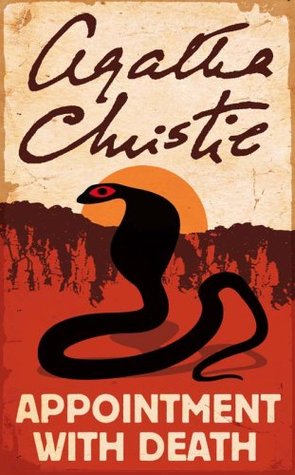
Appointment with Death: A Hercule Poirot Novel (#18)

By Agatha Christie


In this, the eighteenth novel of Poirot's adventures, a tyrant is killed and it is up to Poirot to find out who did it.

Mrs. Boynton, head of the Boynton family, rules with a rod of iron over her family. They hate her, but they can't do anything about it. The first part of the story is told through the eyes of Sarah King, who later falls in love with Mrs. Boynton's stepson, Raymond Boynton, Dr. Theodore Gerard. And then, Mrs. Boynton is discovered dead on the cliffs of Petra. Poirot is summoned and interviews each and every one of them, including Miss King's and Dr. Gerard's two traveling companions, Lady Westholme and Miss Pierce. Eventually, Poirot solves the case, proving it was not the Boynton family nor Miss King or Dr. Gerard who had killed Mrs. Boynton, but was instead Lady Westholme, who wanted to prevent Mrs. Boynton leaking compromising information about her.

While one laments the obvious lack of Poirot in the first part, and also that he does not do much in the second part except interview, 'Appointment with Death' makes for interesting reading, boosted by Christie's superb language in describing the Boynton family's plight.

The web of intrigue around the hated woman is weaved tight in the first part, though it is draggy at times and the introduction of no less than nine characters in the span of a single chapter is confusing.

The second part is also a bit of a let-down, as the eagerly awaited Poirot talks and talks and talks some more. The interviews are long and boring, and one can hardly keep his eyes open through these dreary pages. The conclusion comes much too swift, and the confusion caused by each family member's  lies is not cleared up much by Poirot's 'testing one theory against the other' method.

All in all, 'Appointment with Death' is hardly a spectacular book. However, the mystery is a delightful one, though one wishes the conclusion could have been a bit better and yet, it is still the shocking solution we have all come to expect. 'Appointment with Death' is not a bad book. But then again, it isn't a good one either.

Rating: 6.5/10
Advice: Only read this if you have read all the good Poirot novels.

The Reviewer is a proficient collector, and his favourite things to collect are thoughts on books. Share your thoughts on this review below and spread the word to your friends!